CAMELS HUMP MEADOWS
AN INVITATION TO BECOME A GUARDIAN
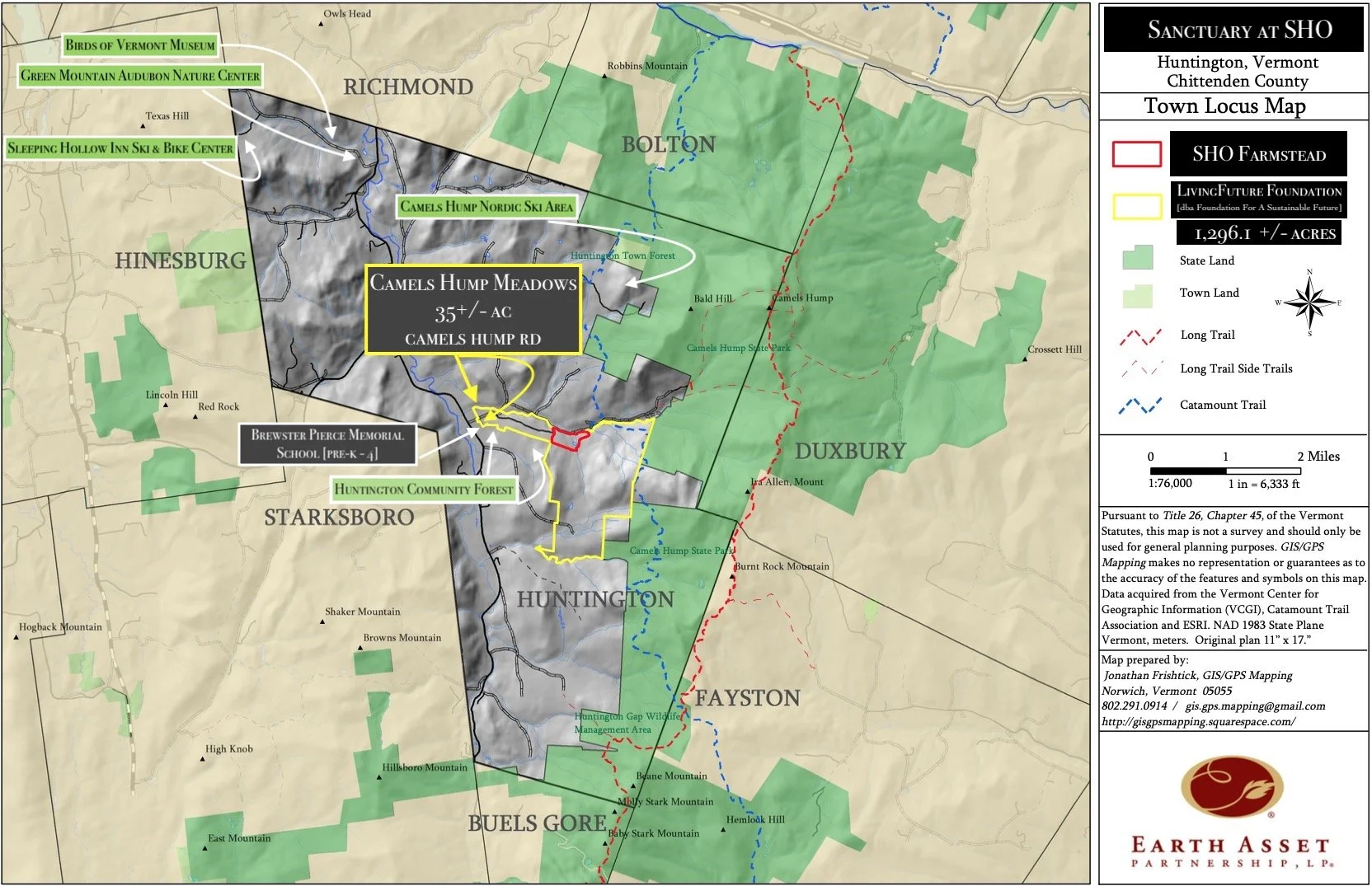
You can become a Guardian through a philanthropic gift to preserve LivingFuture’s stewardship of these fields or through private purchase of them. Both options facilitate the ongoing work of LivingFuture to protect its entire 1296-acre holding within a kinship-centered, food-yielding conservation community
Winter Coyote in Brush Brook Meadow
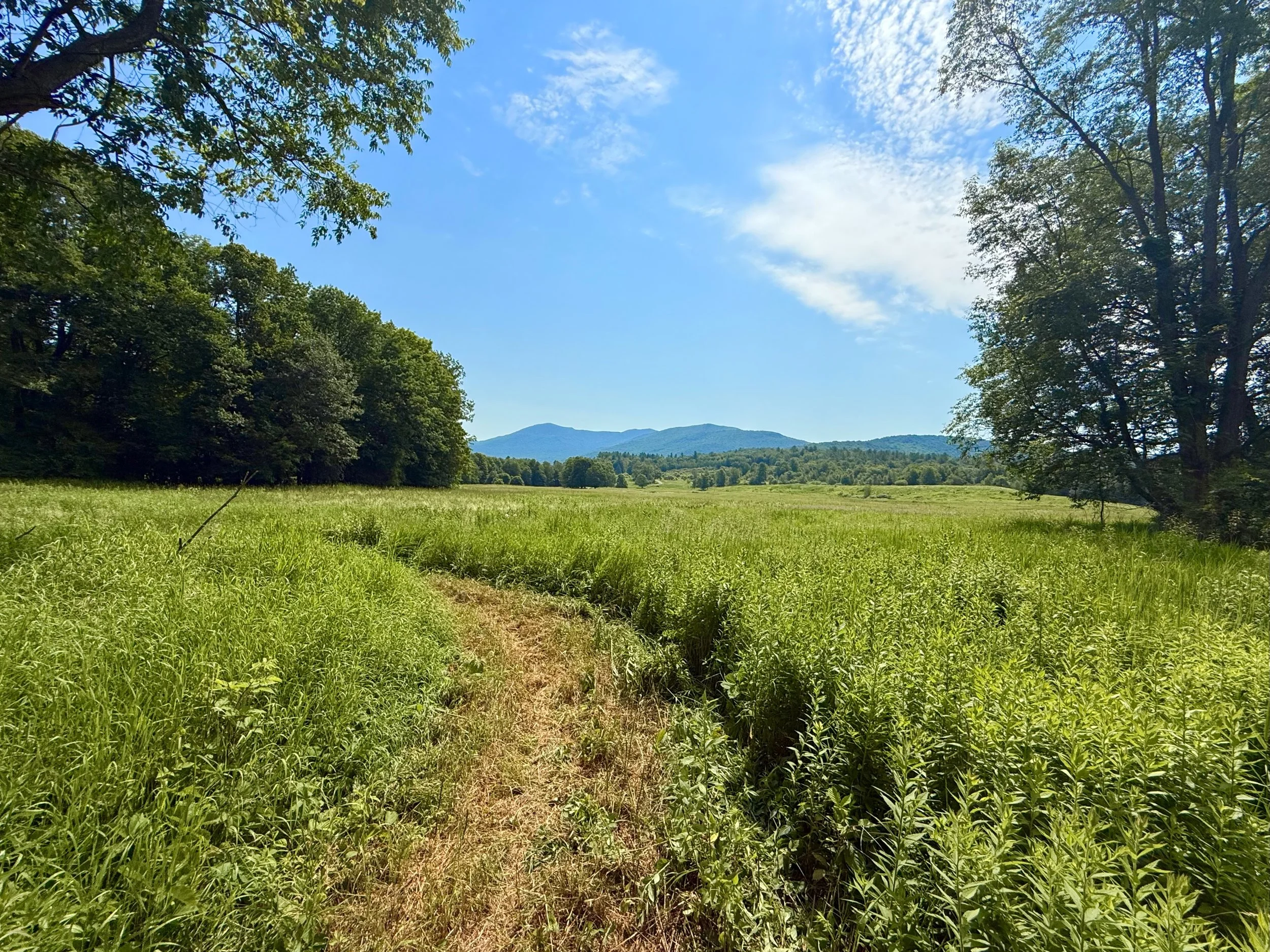
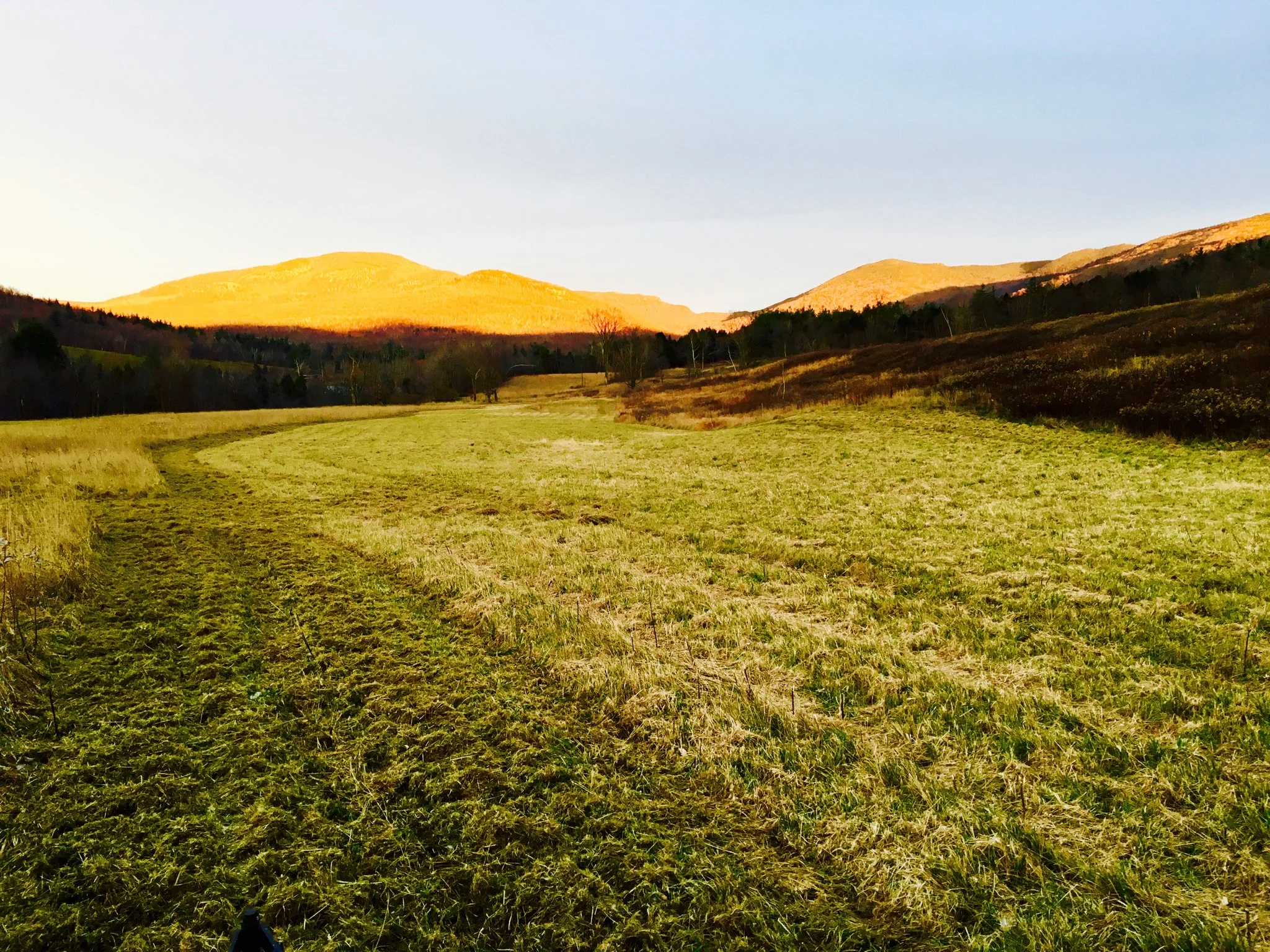
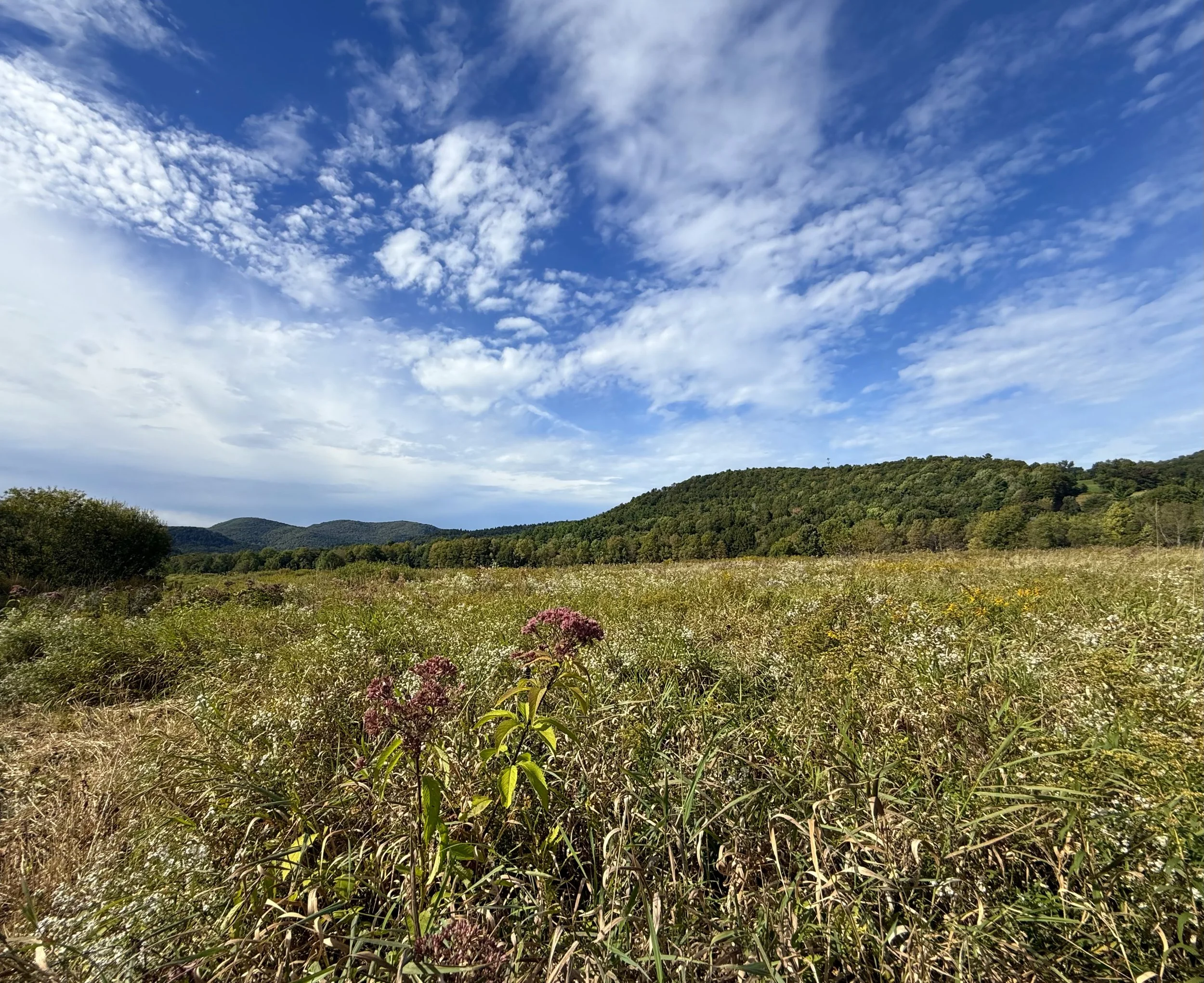
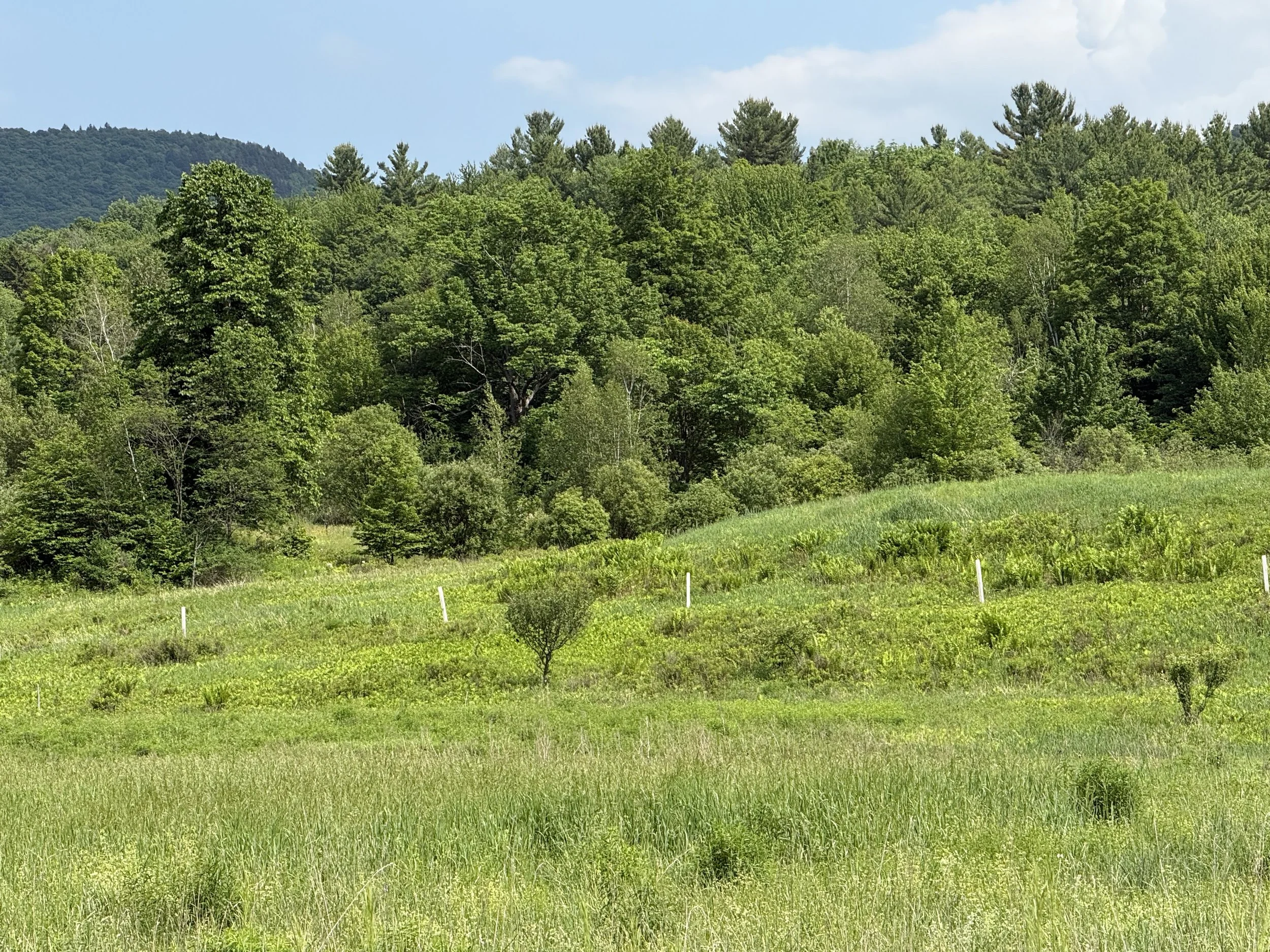
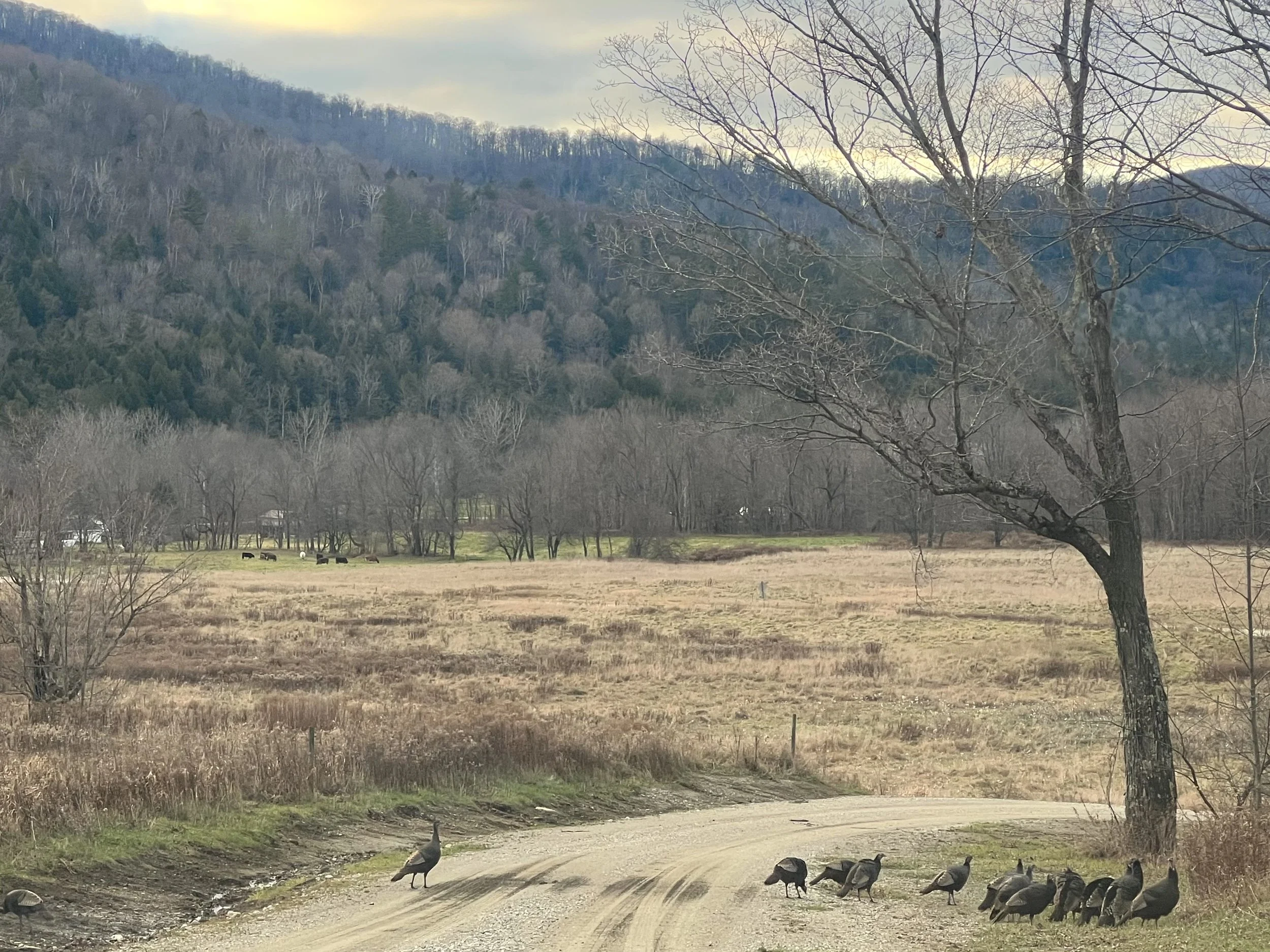
Brush Brook Meadow Looking East
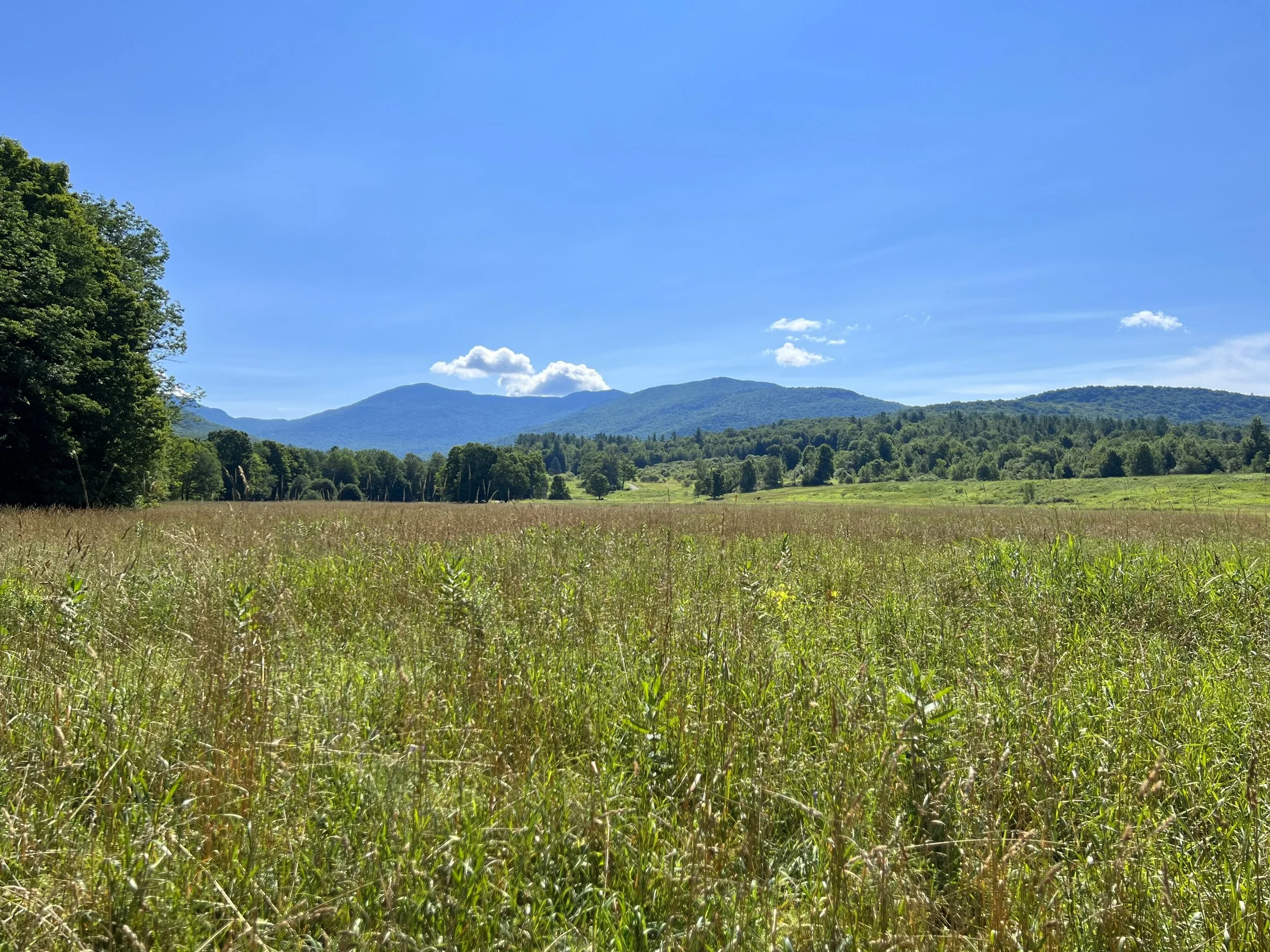
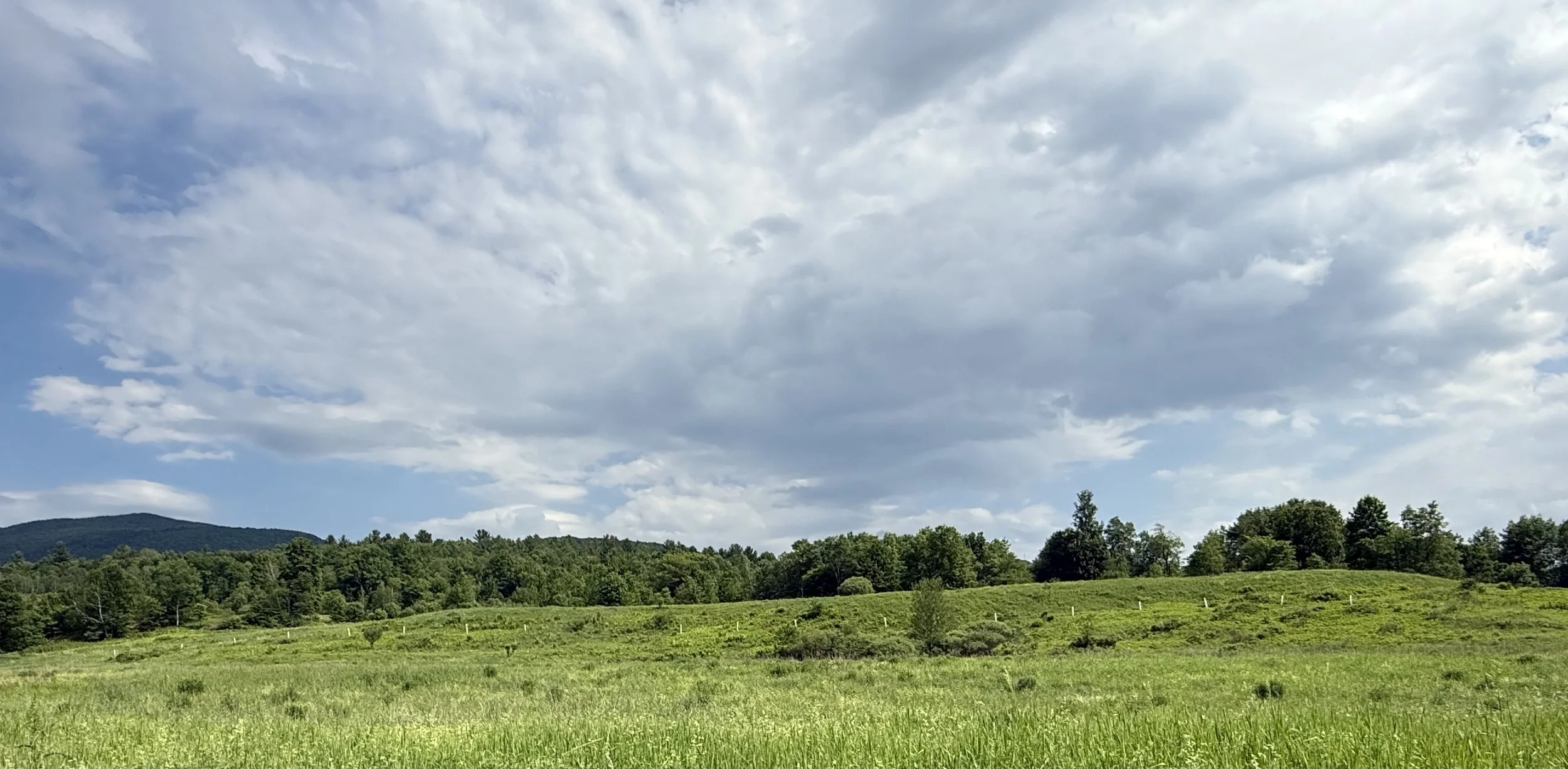
Camels Hump North Meadow Looking South
For twenty-three years, these 34.5+/- acres of meadows, woodlands and waters have been part of a much larger whole: approximately 1,296 acres stewarded by the Foundation for Sustainable Future (dba LivingFuture) as a place for rewilding, conservation, farming, and an ongoing relationship with the living landscape.
The Foundation is now considering the sale of approximately 34.5 acres in two field parcels along Camel’s Hump Road in Huntington, Vermont, while retaining approximately 1,260 adjoining acres.
These are the last substantial open, undeveloped meadows within the Foundation lands at this gateway to Camel’s Hump State Park. We are offering them privately and hope to invite donors or a buyer who recognizes both their remarkable potential as a place to live and the relationships that already extend and surround them.
The Land
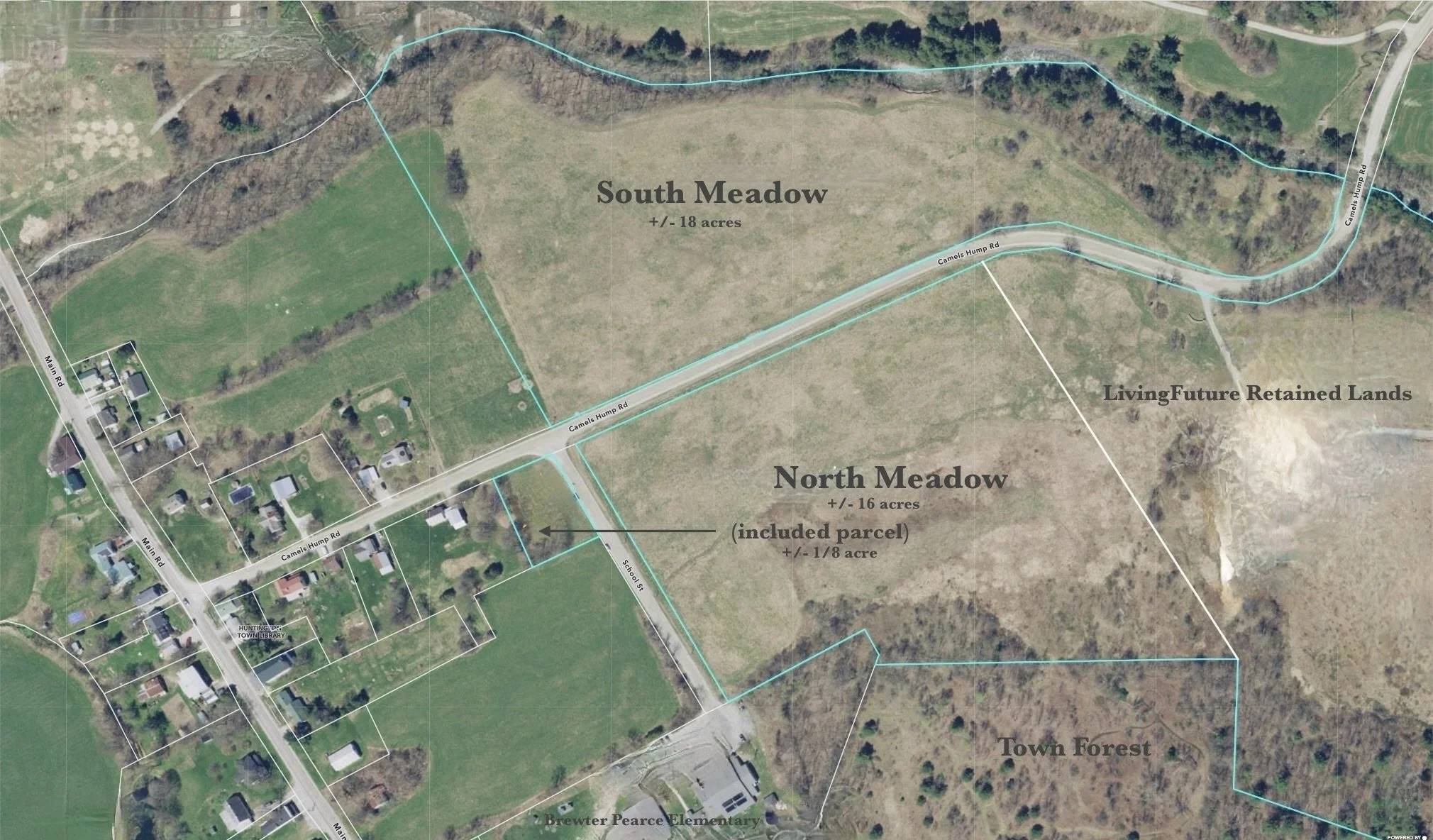
The meadows comprises two predominantly open field areas on the north and south sides of Camel’s Hump Road at the edge of the existing village.
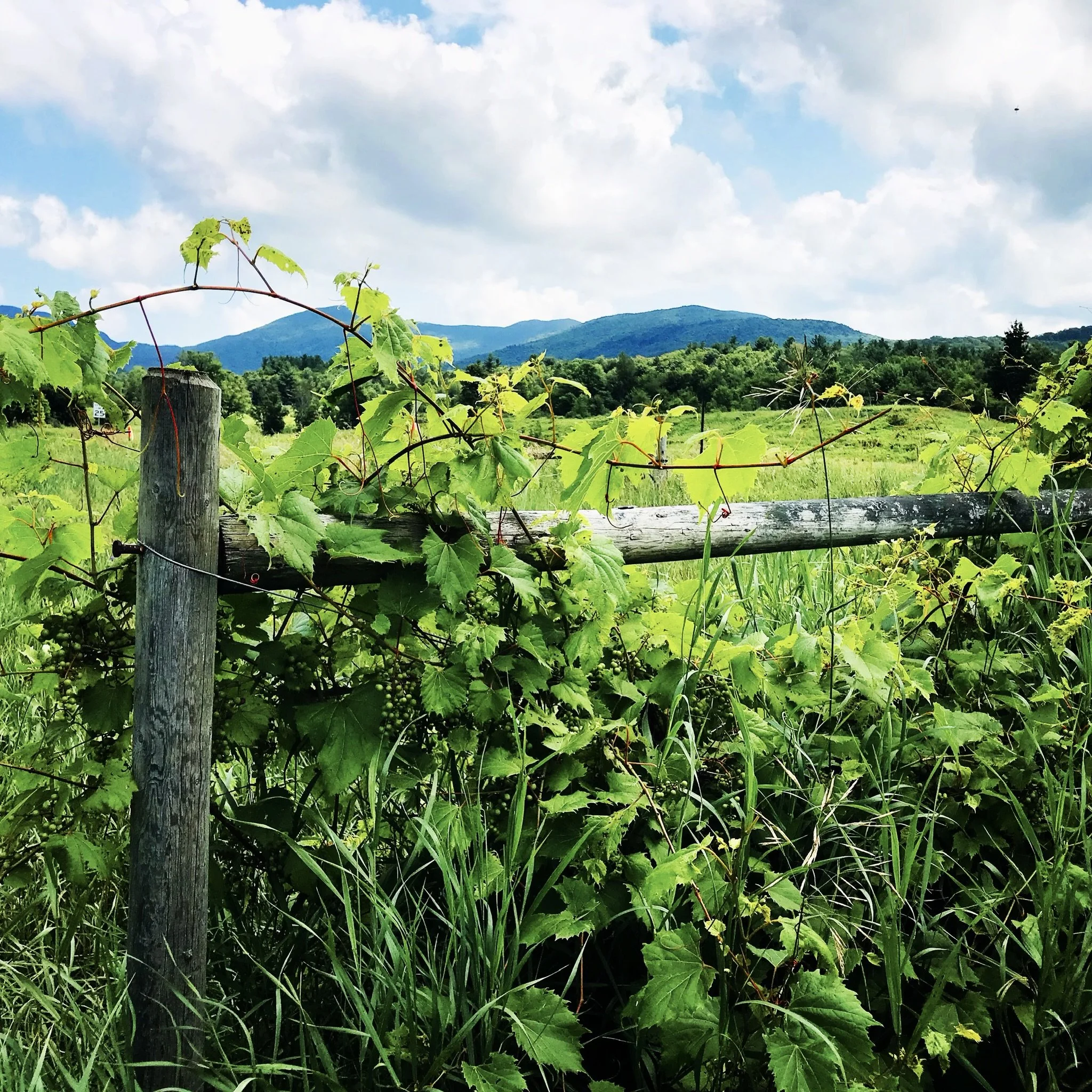
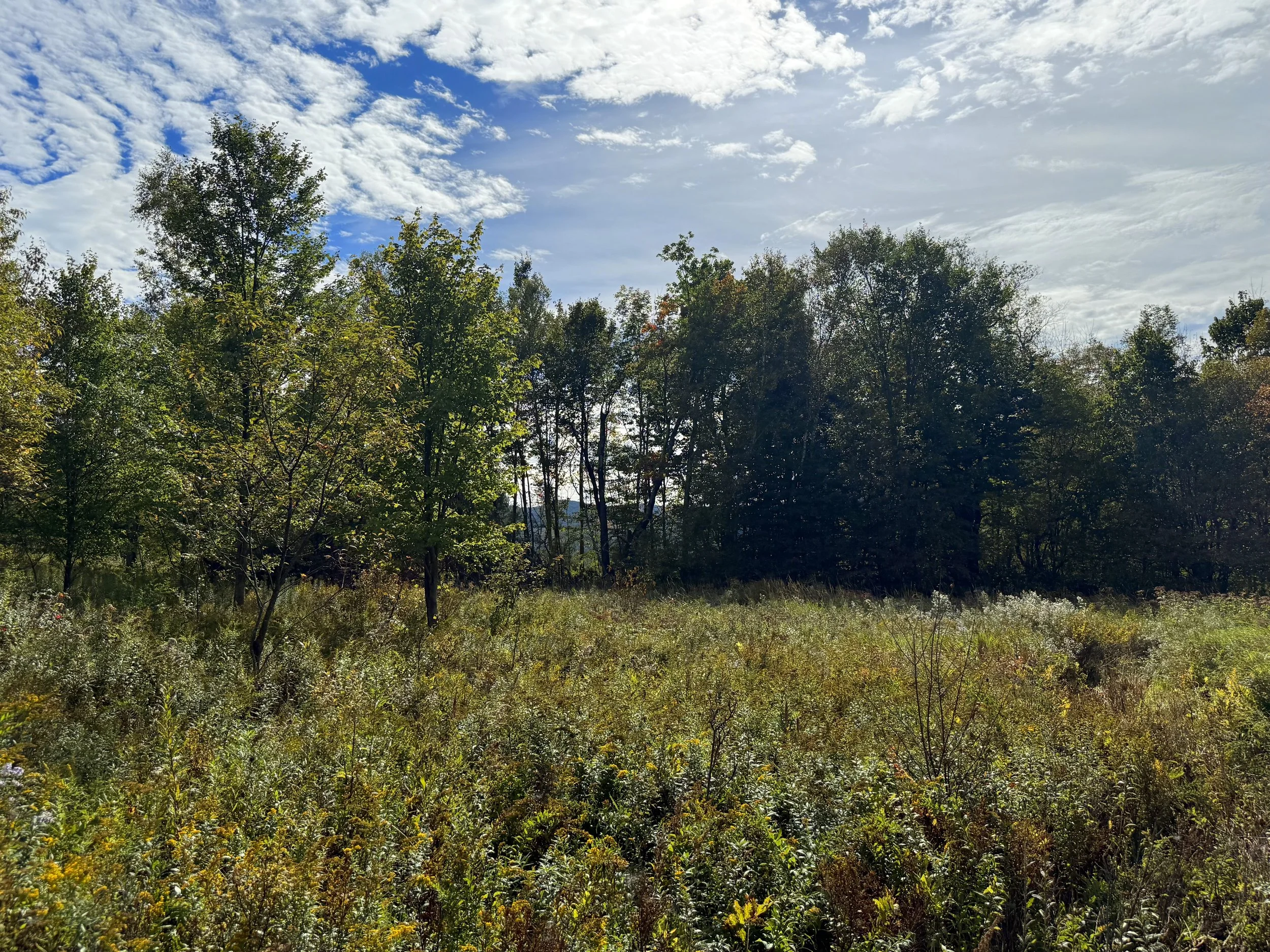
The northern meadow is bordered along its northern edge by Brush Brook, with an established wooded riparian corridor and scattered old apple trees from times past.
It is intersting to note here that Brush Brook has never flooded into the north field—not even during Hurricane Irene, or the floods of 2024. Some minor stream bank erosion has occurred, and has been replanted with wildlife-enhancing tree species and the beginnings of an oak grove by the Friends of the Winooski River.
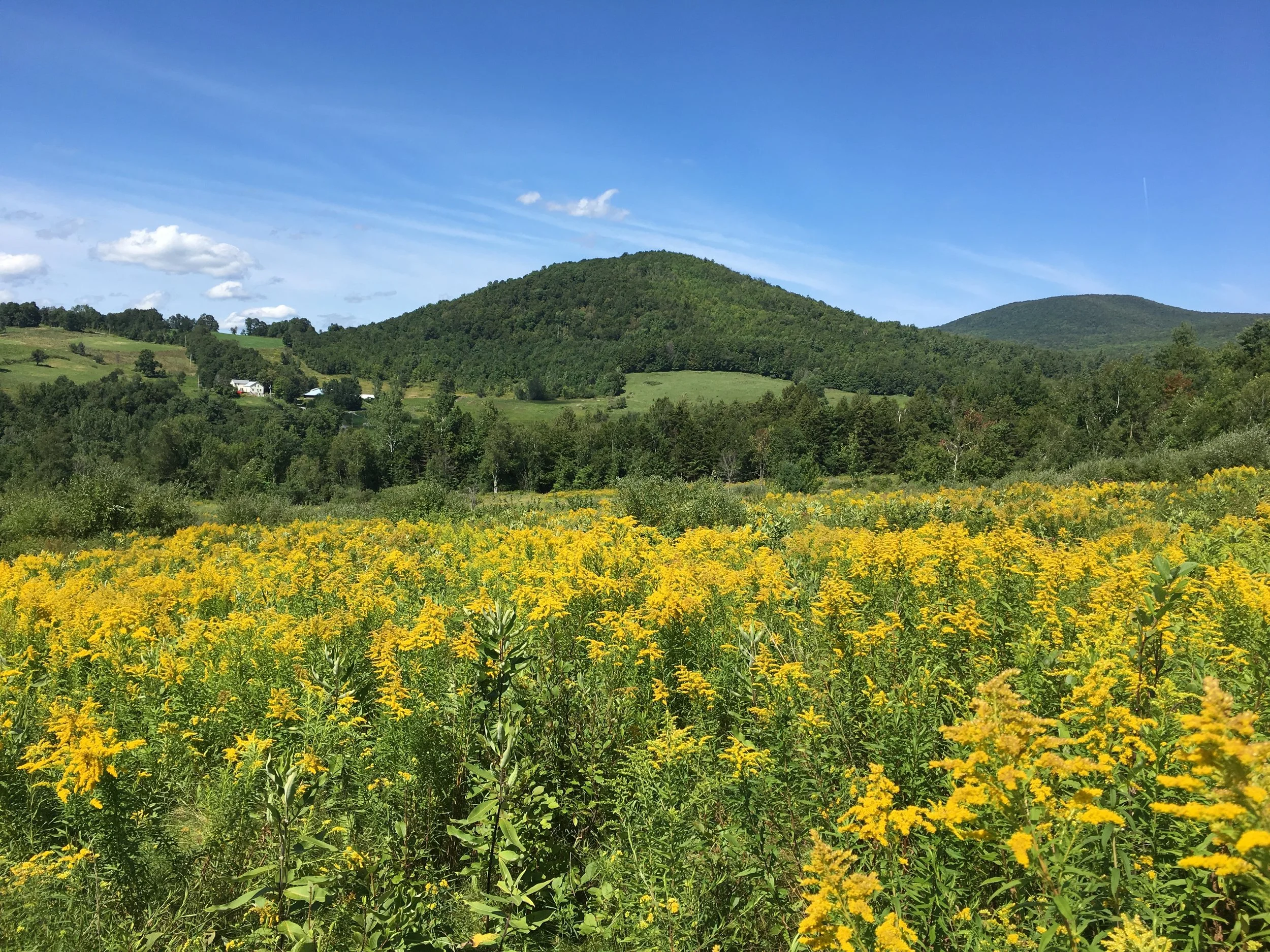
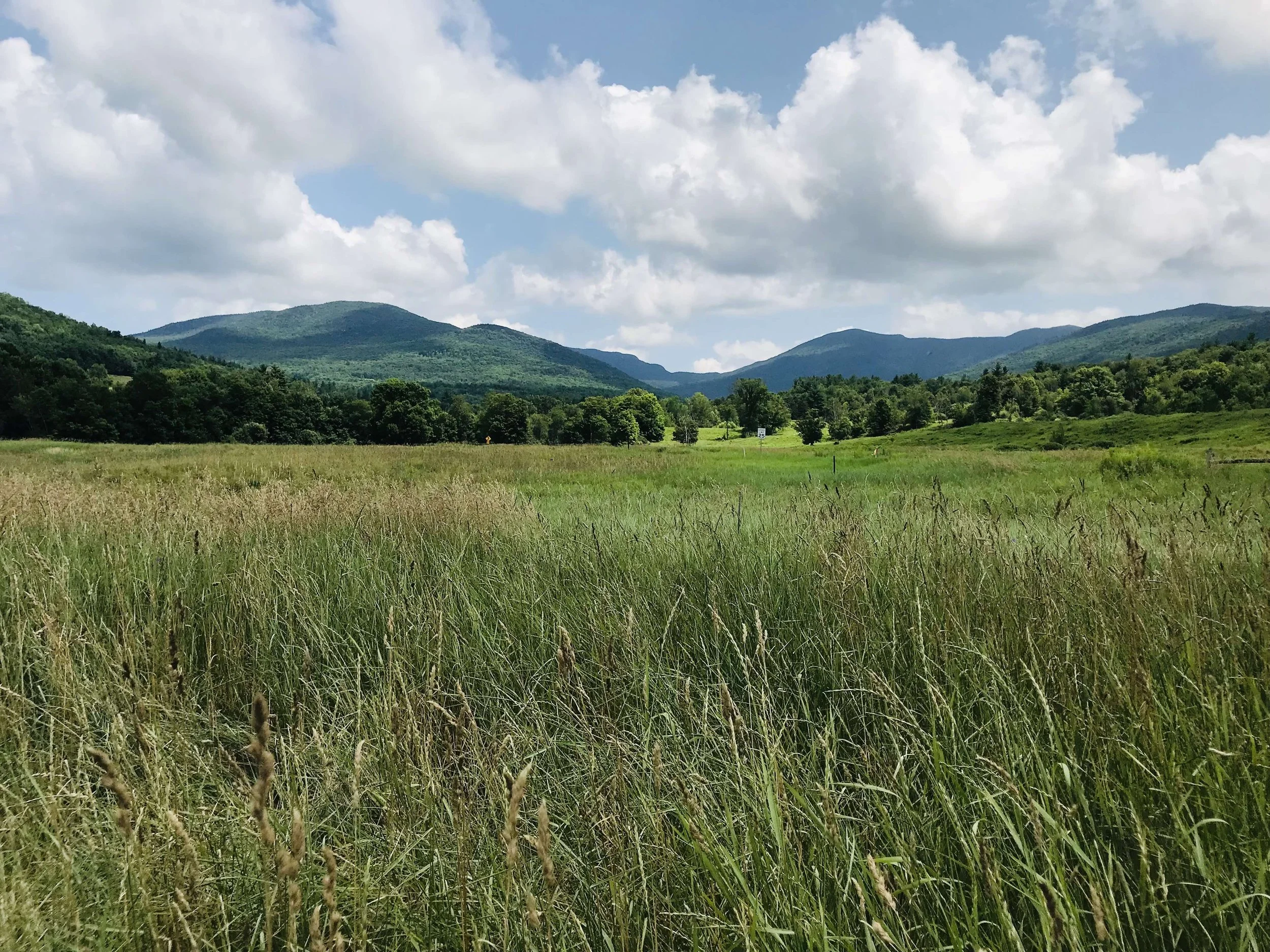
Beyond the riparian edge, the land opens into broad meadow with excellent southern exposure and expansive views toward the surrounding hills and Green Mountains.
The southern meadow shares its full southern boundary with the 245-acre Huntington Town Forest, whose public trail network can be accessed easily from the property for walking, hiking, trail running, skiing and snowshoeing. Brewster-Pierce Memorial School, Huntington’s K–12 school, is at the southern edge of the meadow and within walking distance.
Both fields have extensive frontage along town-maintained Camel’s Hump Road. Power, telephone and fiber-optic service are available along the road, with utilities buried through this section of the corridor.
The lands have been professionally soil tested, with perc testing demonstrating ample septic capacity on both fields and flexibility for clustered residential siting.
Their open character and southern orientation also provide excellent opportunities for passive and active solar design, gardens, orchards, homesteading and other land-based uses, subject to applicable permitting and approvals.
Twenty-Three Years as Refuge
Although these lands have significant residential potential, they have not been treated as development parcels.
For more than two decades they have remained part of an interconnected landscape of forest, meadow, brook, wetland and mountain lands. The Foundation has stewarded them with particular attention to wildlife and habitat, and they continue to support a broad community of birds, raptors, and mammals moving between Brush Brook, the open fields, adjoining forests and the larger conserved upland habitats.
We recognize that a new owner will bring their own needs, ideas and relationship with the land. We are not seeking to prescribe what that relationship must become. We do hope to find someone who sees that a home can be created here while retaining much of what already makes the place exceptional.
Huntington and Camel’s Hump Mountain
The property sits at one of Huntington’s gateways to Camel’s Hump State Park and the Green Mountain ridgeline.
Huntington remains an unusually intact Vermont rural community: no stoplights, a long-standing family-owned general store, a strong local school, working farms and forests, swimming holes along the Huntington River, and extensive public and conserved lands.
The surrounding area includes Camel’s Hump State Park, the Huntington Town Forest, the Birds of Vermont Museum, Sleepy Hollow, Nordic skiing, mountain biking, hiking, paddling and thousands of acres of public land.
At the same time, Huntington is remarkably central to much of north-central Vermont. Burlington, the Mad River Valley and its ski areas, Waterbury, Stowe, Montpelier, Middlebury and Lake Champlain are all readily accessible.
It is possible here to live a genuinely rural life without being profoundly remote.
An Unusual Opportunity
What distinguishes these lands is not any single feature.
It is the combination: open meadow and moving water; excellent soils and solar exposure; direct access to public forest and trails; proximity to a highly regarded local school; extensive road frontage and modern utilities; mountain views and wildlife habitat; and approximately 1,260 acres of Foundation lands remaining immediately adjacent.
For twenty-three years, these fields have belonged within one larger landscape rather than existing as isolated parcels awaiting development.
If they now become part of another family’s story, our hope is simple: that the people who come here will take time to know what is already present, and create a life that adds another good relationship to this place.
Additional information, maps, soil and septic documentation, proposed parcel configurations, photographs and showing arrangements are available to qualified prospective purchasers upon request.
FAQ
-
While we’ve resisted fragmenting the Foundation’s ownership of the 1296 acres that currently comprise its holdings, we’re interested in inviting more people into relationship with the land and community.
We’re recapitalizing the Foundation in order to dedicate the next several years to designing and placing the remaining 1260 acres in a kinship-oriented conservation covenant, which centers a relationship of mutual dignity and reciprocity between human and non-human communities.
If we are able to raise a philanthropic fund, we will not sell, and instead enfold the meadows into ‘Conservation as Presence’, expanding the community of humans tending the land in perpetuity.
-
We ARE a private conservation organization. If we are able to raise $1.5 million in capital, we can retain our ownership and continue to enfold the meadows within our conservation planning. Since the meadows abut the existing village, they are a natural point of thoughtful expansion of the village, and could become an integrated ecological village setting of small dwellings clustered to preserve the habitat and food-growing opportunities of the meadows.
If we do proceed with a sale, there will be some deed restrictions that run with the land to preserve habitat, wildlife connectivity, water, and visual integrity, while encouraging organic and regenerative practices in this special place.