relational conservation at sho farm
CONSERVATION AS PRESENCE
writing a kinship-centered conservation easement for livingfuture
We coalesce decades of knowledge gained across modern disciplines—forestry, wildlife ecology, regenerative, plant-centric farming, land conservation, the law, wildlife coexistence , ecological food traditions, and human health—to question the predominant mindset that expresses humans’ separation from the rest of life, a separation that still informs how we deploy cultural resources, even within the fields of philanthropy and land conservation.
conservation as ongoing cultural restoration
We examine the meaning of ‘conservation’ within our era of habitat loss and climate disruption where a wilderness devoid of humans is often viewed as a solution. Instead, we seek out a more deeply pragmatic, intimate, sacred, and reciprocal relationship between humans and where and how we live.
LivingFuture Foundation focusses on land care that reflects an animistic relationship with the earth and her inhabitants.
Appreciating that everything is conscious shifts the practice of conservation towards an expanded awareness of, and cultural engagement with natural communities; not a retraction from them.
learning from first nations
Indigenous peoples have established a vital and durable relationship with the land over millennia. Who better to learn from?
More and more of us are re-learning that Earth and her inhabitants comprise a web of mutually-sustaining relationships that implicate human existence as one part of the great web of life.
This approach steers away from romanticizing wild nature or seeking to preserve landscapes devoid of humans, and instead emphasizes place-specific ways of tending-over-time, where intimacy with place naturally implies conservation.
A kinship worldview regard plants and animals as family and as sovereign beings. This sacred perspective is exactly the medicine we practice as we re-learn how to live in partnership with Earth.
We believe both food systems and land conservation can work together to facilitate multiple habitats that also meet human needs with enoughness.
Land conservation has historically implied the prevention of development on as-yet undeveloped land. But there’s so much more involved in conservation than simply preventing development. We view conservation as our responsibilities to the land and to our beyond-human relatives in addition to our ability to receive Earth’s gifts. Our approach to conservation involves the restoration of right-relationship between humans and the land. In this regard, land conservation cannot be effective without human cultural transformation toward a more kinship-centered worldview.
Conservation as Presence optimizes acreage going under conservation by supporting intelligent human habitation as well; habitation that facilitates guardianship of land.
Optimizing (vs simply maximizing) conservation acreage enhances benefits multifold, and asks us to change as a culture.
Thus, we optimize discrete parcels to serve a human presence dedicated to optimal stewardship of life on the land. This begins to reflect an kin-centered approach of non-separation between people and the land.
a KINSHIP approach
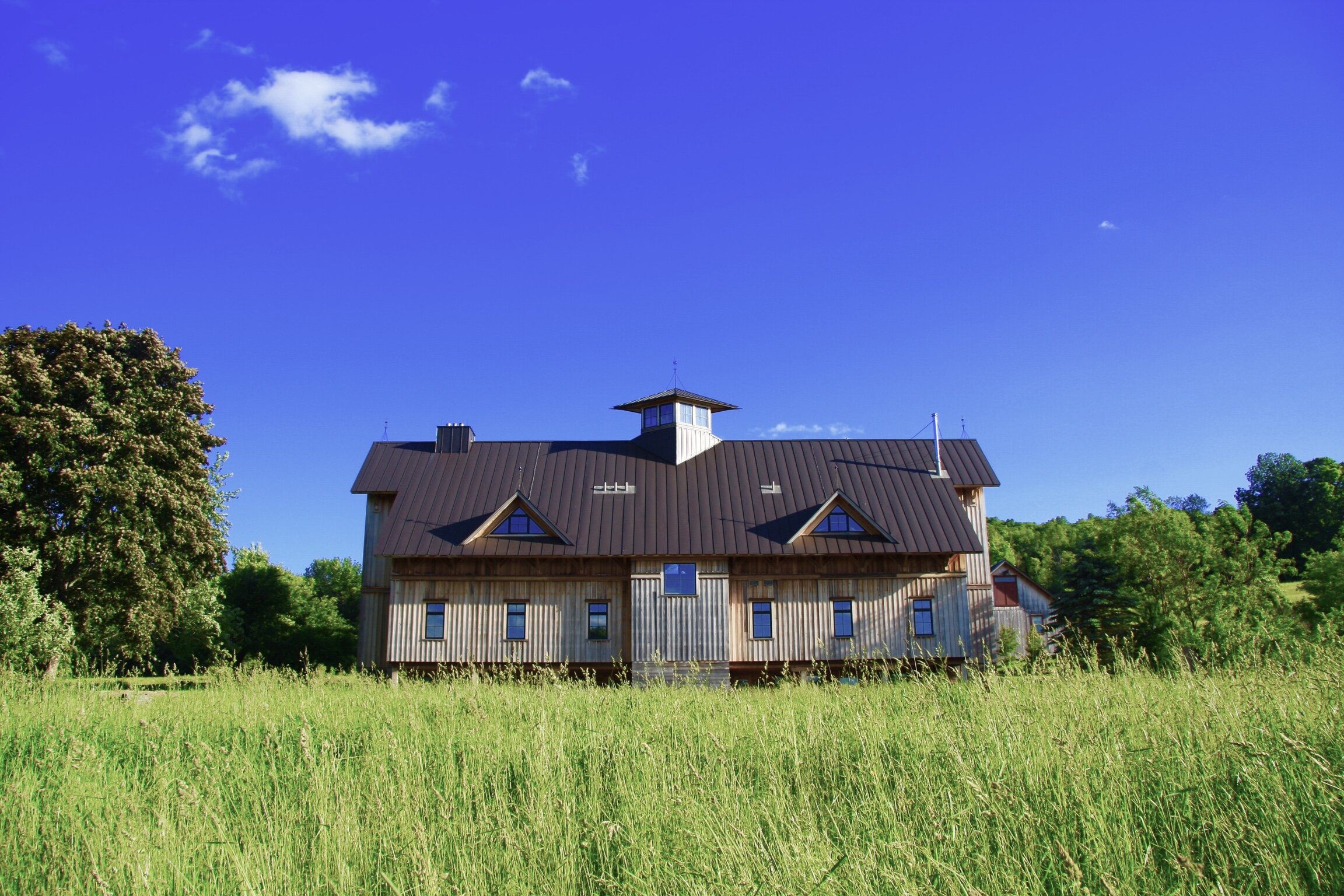
LivingFuture Foundation has been sponsoring ecosystem-sensitive research on its 1296 acres in the mountains of Vermont since 2003. The land is currently leased by SHO Farm, LLC, a project incubated by LivingFuture.
LivingFuture’s SHO Farm habitat abuts 30- thousand acres of State land—itself core habitat—to provide a unique wildlife corridor leading from the height of land in the surrounding mountain range to the river-bottom village settlement below.
Comprising an entire watershed, LivingFuture’s lands are a critical conservation priority. When paired with our rigorous stewardship practices forged over the last 23 years in collaboration with the land as well as professionals from varied disciplines, conserving SHO Farm and the invaluable body of research generated since 2005 will hopefully pave the way for other land guardians to implement similar cohabitation practices throughout the world.
LivingFuture will author a kinship conservation covenant—The 7R Covenant— to run with the land, reducing costs while leveraging co-director Shawn Smith’s decades of IRS yellowbook-compliant appraisal and conservation easement experience.
The covenant will be focus on reciprocal responsibilities between. humans and place, which can be stated with seven “R” words—Reciprocity, Responsibility, Relationship, Reverence, Respect, Rights, Representation— while supporting ongoing wildlife coexistence farming practices and care of our wild kins’ homes.
Future wildlife relationships and forest care will be responsive to changing conditions, for example, by planting beaver-created wetlands with harvestable wild foods, or by carefully weighing the potential necessity to hunt deer within the context of prey species over-abundance and population health, survival necessity, and the ‘honorable harvest’ ethic.
riparian agoforestry
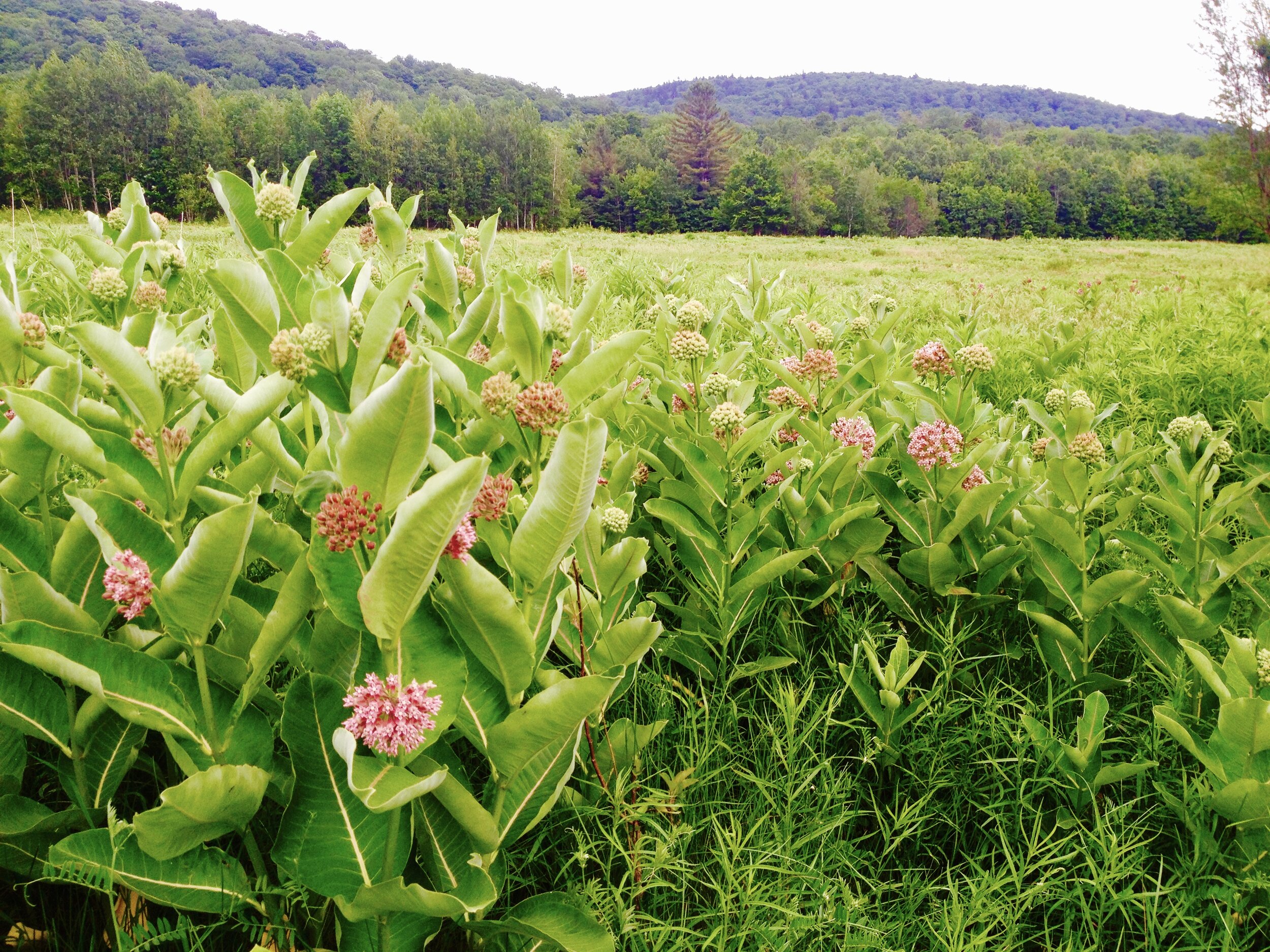
A core aspect of the conservation project will involve riparian agroforestry plantings begun in 2026 on LivingFuture’s 18-acre meadow bordered on the north by Brush Brook, and on the south by Camels Hump Road. If LivingFuture continues its stewardship of the Camels Hump Meadows, we will continue to plant nut and fruit perennials combined with pollinator and wildlife habitat and small areas for vegetable, grain, and legume growing that will serve as an example for other riparian corridors in the State, supporting their conversion to watershed-stable, food-producing ecosystems.
The Riparian Agroforestry meadow abuts the village of Huntington Center, and would otherwise be the logical place to expand the village, especially since Brewster Pierce Elementary School sits across the road.
The Riparian Agroforestry project can also offer valuable land and small-footprint dwelling access for new, Traditional-Ecological Knowledge-inspired farmers who wish to create an example of climate-and-wildlife-adaptive food ecosystems. Such an installation may include moderate public educational access that harmonizes with breeding bird and wildlife needs.
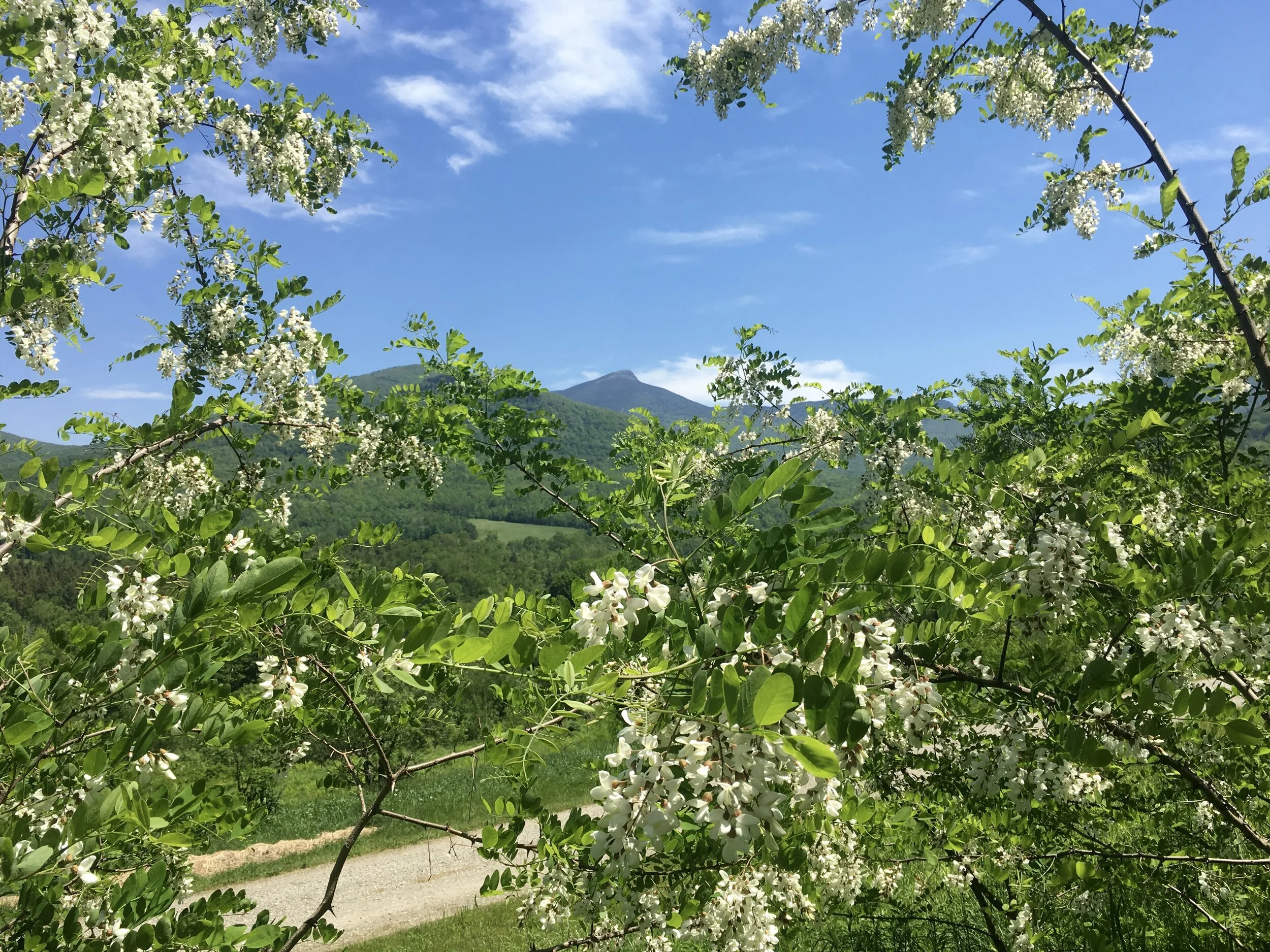
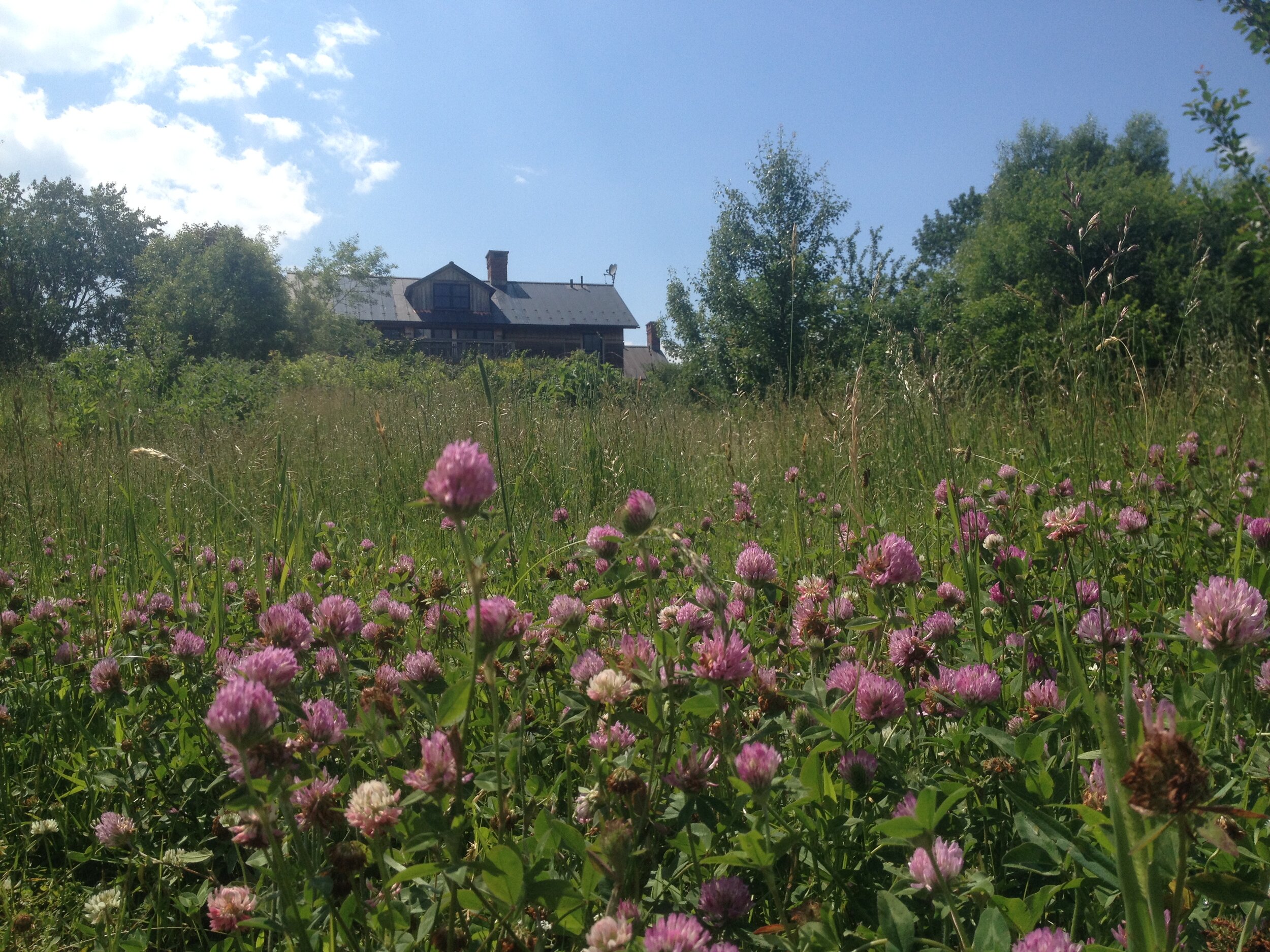
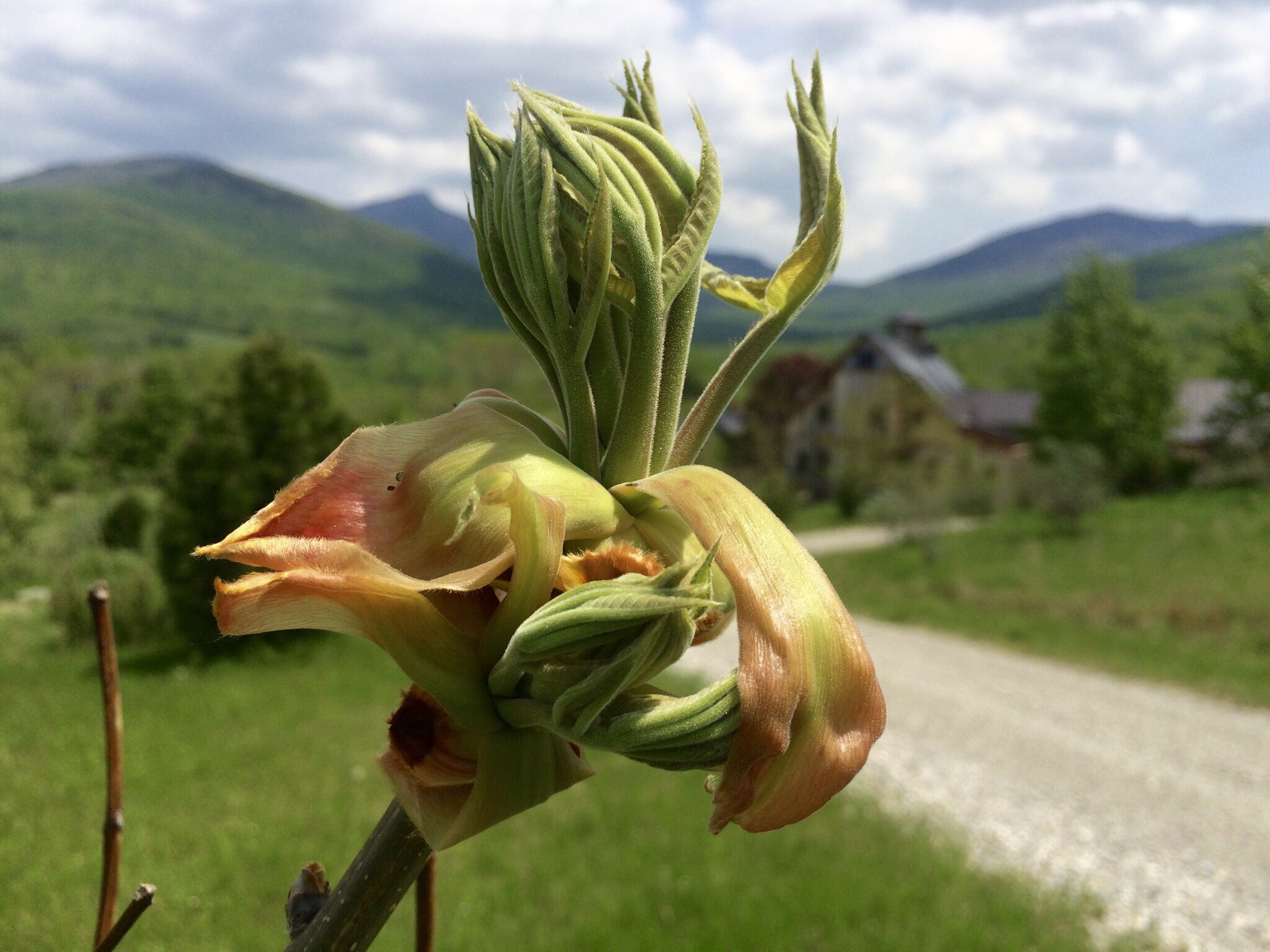
Looking east at Camels Hump from the permaculture orchards, black locust blooming and buzzing with pollinators. Edible blossoms, like sweet peas!
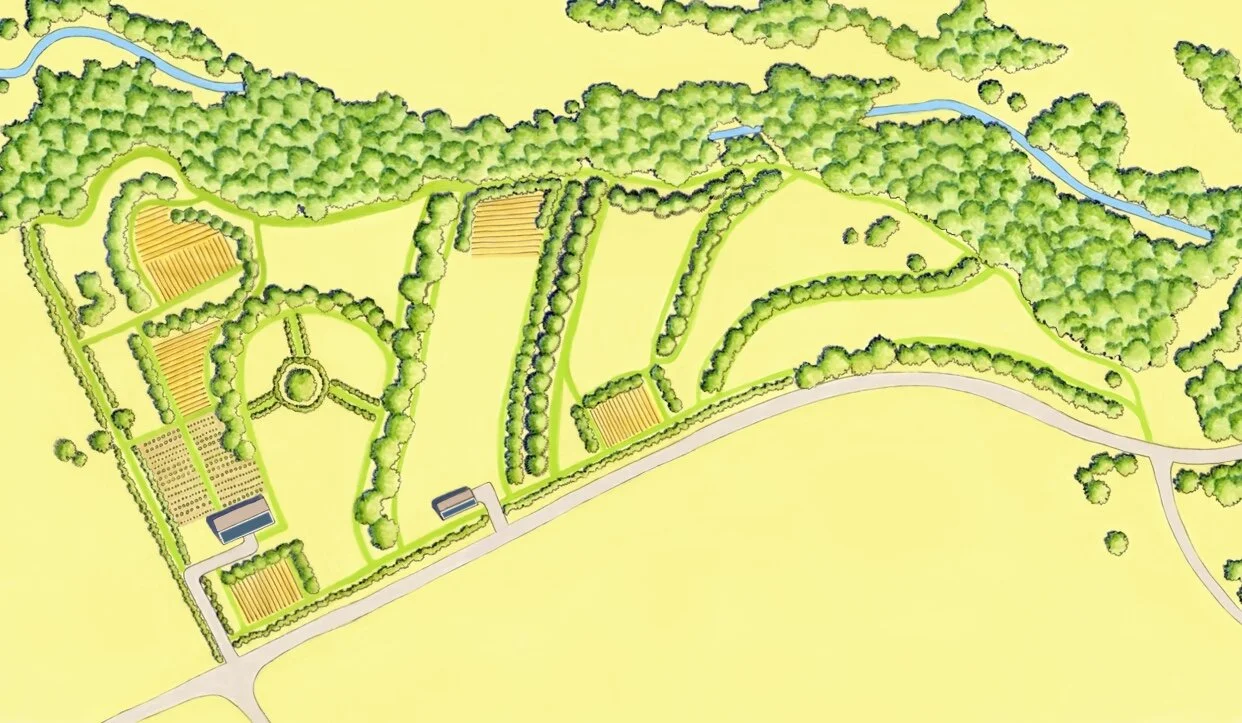
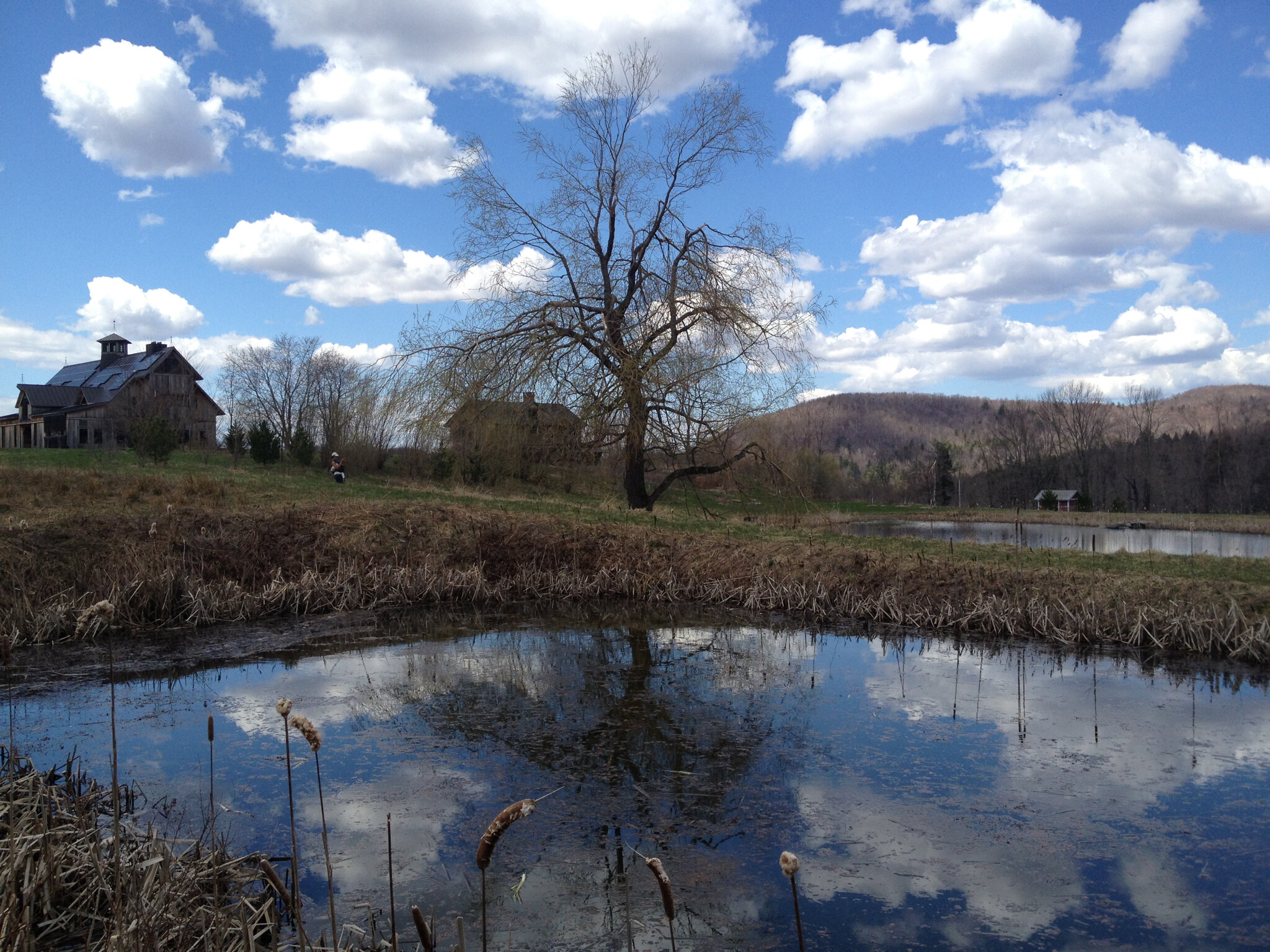
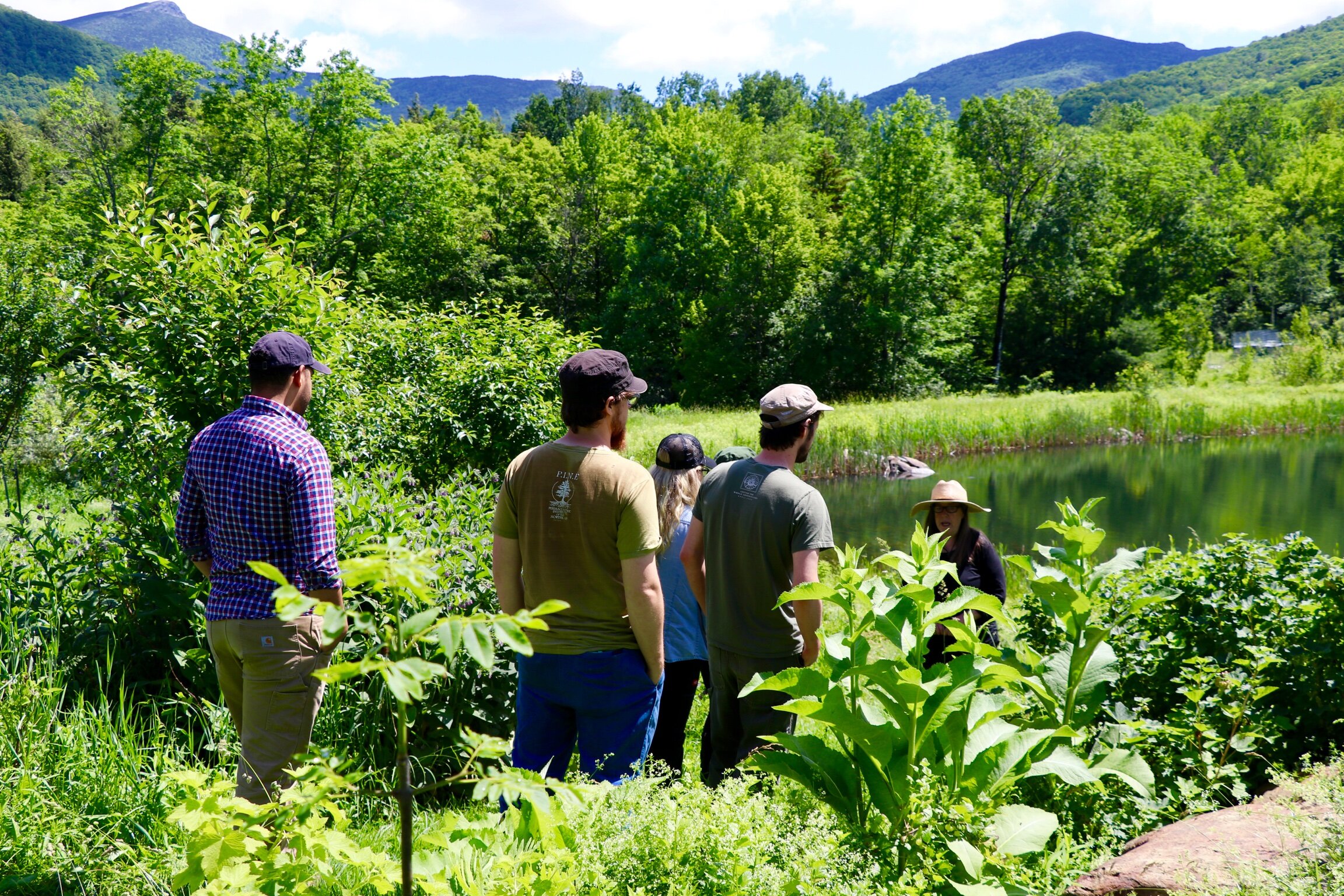
Riparian Agroforestry at SHO Farm, with perennial tree crops, pollinator habitat, native plant nursery, and biointensive raised annual beds.
Testimonials
Susan C. Morse
Forester, wildlife ecologist, photographer, tracker, author, teacher
I have been the consulting wildlife ecologist for LivingFuture Foundation since 2005. As a wildlife ecologist, author, photographer, wildlife tracker, forester, and educator, I bring a suite of skills that qualifies me to assign conservation priorities. The Foundation’s 1300-acre property abutting State forest is one such priority, since there's so little core habitat left in the state of Vermont that is secure from the future.
Since I was born, the world’s population has tripled, which greatly impacts biodiversity and wildlife habitat. In any biodiversity resiliency plan, we need space within core habitats and we need connectivity to allow all animals a means of adjusting to what we’re experiencing. LivingFuture’s property spans an entire watershed, from higher elevation forest and seeps to valley and village riparian habitats, providing the connectivity from higher to lower elevations. Higher elevation habitat connected to lower valley habitat is a central conservation value that most people are not aware of. The Foundation’s land also has some excellent soils that support rich maple stands, and enjoys great biodiversity in terms of age classes and biological diversity.
Vermont is not like the other wild places where I have gone on expeditions—the Artic or the borreal forests of Canada or the Rockies with their vast, uninterrupted core habitats. This is due to Vermont’s many roads, towns, and recreational activities. Those three elements intrude on un-fragmented habitats. LivingFuture’s 1300-acre property is a great example of what we need to strategically save—immediately—while we can.
LivingFuture’s overarching vision excited me from the beginning: Forest management in the context of a kind of wild-working agriculture that Vermont is not used to yet. Vermont wasn’t used to cows at one point! The way we practice agriculture now isn’t sustainable. It must change. The Foundation is at the center and bullseye of that change. As I see it, LivingFuture envisions a locally-driven, multifaceted agriculture that can make food such that it is compatible with wildlife, water, and soil. LivingFuture’s land is the perfect place to experiment with how to realize an agriculture that preserves biodiversity. Conserving its land is critical.
Ethan Tapper
Chittenden County Forester, Vermont Department of Forests, Parks & Recreation
The value of large, intact parcels of forested land in Vermont’s increasingly fragmented and developed landscape cannot be overstated. Large “blocks” of “interior” forest, such as is found at SHO farm, provide habitat for a wide range of wildlife, with increased opportunities for foraging, shelter, and reproduction. The unbroken nature of habitat blocks like this also afford wildlife the opportunity to move as they need to respond to environmental changes.
Privately-owned forested blocks like SHO farm’s property in Huntington produce massive public benefits – cleaning our air and our water, sequestering and storing our carbon, providing habitat for wildlife and the pollinators which support our food systems. They also provide cultural benefits, supporting the rural character of our communities and forest-based recreation. When actively managed they produce local, renewable resources that support local economies and mitigate the need for resources produced more distantly, under more adverse environmental and social conditions.
The benefits produced by intact forests --- to humans, our communities and our environment --- increase exponentially with size. Protecting large habitat blocks from parcelization, fragmentation and development should be considered a priority in supporting the culture, character, economy and ecology of our communities. Once protected, thoughtful management can increase the values offered by these forested blocks exponentially, to humans, wildlife, and forest ecology.
Steve Libby
Executive Director, Vermont River Conservancy
Vermont River Conservancy is convinced of the need for a state-wide effort to create ecologically effective riparian buffers that also provide productive agricultural management outcomes for the landowner. Thousands of miles of Vermont rivers could benefit from an evolution of land management from traditional cropping techniques (and the inherent negative water quality impacts of those cropping techniques) to “River Friendly” agricultural practices.
The Lower Field at the SHO Farm, as a public demonstration plot showcasing the progressive agricultural management practices being researched and tested by the Foundation, would be a powerful example for interested current and prospective farmers, agricultural agencies, state and federal land management agencies, local conservation commissions, and other groups.
The Lower Field property would also be an ideal site for numerous educational initiatives using the property as a hands-on teaching site - these initiatives could range from pre-school age introduction to fundamental concepts of soil, water, climate dynamics, through university scale research plots, to professional training for new agriculturalists.
Sally Koch Hayes
Principal, Brewster-Pierce Memorial School
One reason the Outdoor Learning program at Brewster-Pierce is so strong today is because of the partnership with neighboring landowner, LivingFuture Foundation. As an adjacent landowner to the Brewster-Pierce school property, they have allowed school staff and students to hike, observe and learn on their property. While we have been fortunate to use a small portion of the school grounds, partnering with neighboring landowners has expanded our outdoor classroom area.
Since August of 2015, Brewster-Pierce has expanded an innovative Outdoor Learning program. The program began in kindergarten during the first year and has expanded to include all students in grades Pre-K-Fourth, which means that every week 132 students learn outdoors. Some days there are 60 children outside learning at the same time, and the ability to use a wider range of land including fields, the forest and streams allows groups to spread out and enjoy learning in a quiet, calm outdoor setting.
Students have engaged in many place-based learning projects. They have examined a variety of native plant species, observed different animals, including birds, deer and insects, as well as adopted a local tree to watch and record changes over the four seasons. When science concepts are taught with a connection to the local environment including a hands-on, real world component, students are more interested and vested in their learning. Without the commitment and collaboration of our neighbors, this simply could not happen. Our partnership with LivingFuture Foundation has been critical to the growth and continuation of outdoor learning at Brewster-Pierce.
It is without hesitation that I support the continuation of land conservation on adjacent properties to expand environmental education opportunities and to continue to grow outdoor learning experiences in the future.